
Moth Control
Get a FREE Home or Business Pest Evaluation!
Call us
505-658-0822
Moth Control Services
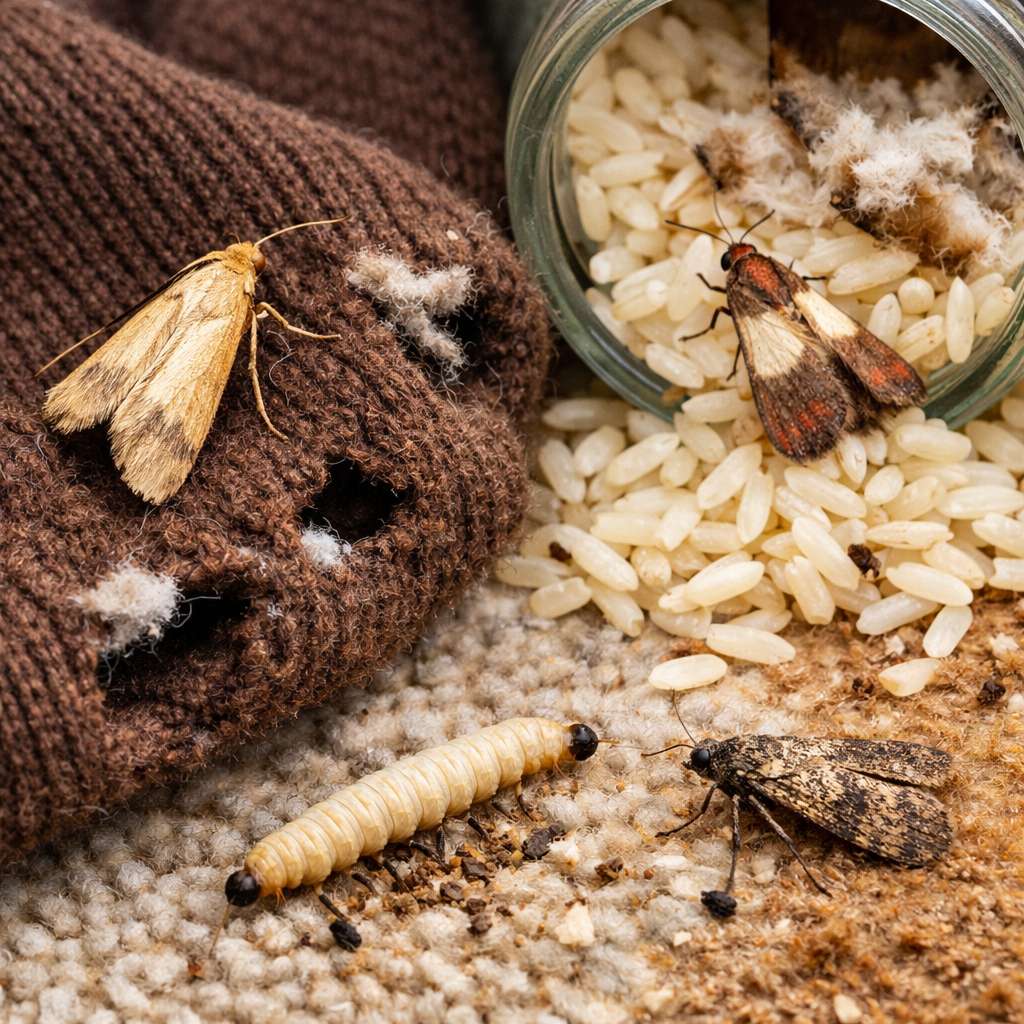
Finding webbing in your flour or holes in your favorite sweater is a frustrating experience. Moths are silent invaders that can ruin food supplies and damage clothing. Because they breed quickly and hide in dark spaces, a minor sighting can turn into a full-blown infestation. Therefore, effective moth control requires finding the source and breaking the breeding cycle.
Manzano Pest Management provides moth control services for homes across the metro. We understand the local moth species and the methods that work safely. Additionally, we offer commercial pest control for business owners.
Understanding the Two Types of Moths
Not all moths are the same. The two most common types that infest homes require different treatment strategies. Furthermore, our seasonal pest prevention programs help monitor these shifting populations.
Pantry Moths
Pantry moths, such as the Indian meal moth, infest stored foods. They lay eggs in grains, flour, cereal, and pet food. Because the larvae feed on these products, you may notice webbing or clumps in your dry goods.
Clothes Moths
Clothes moths target natural fibers like wool, silk, and fur. They thrive in dark, undisturbed closets and storage boxes. Because they avoid light, infestations often go unnoticed until the damage is severe. If you are dealing with other fabric pests, we also offer bed bug extermination and spider control.
Signs You Have a Moth Problem
Moths are often detected by the damage they leave behind. If you notice these signs alongside rodent control issues, it is time for an inspection.
-
Small moths flying around the kitchen or closet.
-
Webbing or clumps in flour, cereal, or pet food.
-
Holes or thinning patches in wool clothing or blankets.
-
Larvae or pupae hidden in dark corners or storage boxes.

What Our Moth Control Service Includes
We do not rely on a single spray. Instead, our technicians use a targeted approach to eliminate the infestation and prevent it from returning.
Thorough Inspection
We inspect your pantry, closets, and storage areas to identify the moth species and locate the breeding sites. While inspecting these areas, we also check for termite control needs where wood damage might be present.
Targeted Treatment
We apply targeted treatments to the areas where moths breed. For pantry moths, this means treating shelving and food storage areas. For clothes moths, we treat closets and storage boxes. Pheromone traps may also be used to monitor activity and break the breeding cycle.
Source Reduction Guidance
Because moths breed in food and fabric, removing the source is critical. We advise you on discarding infested items and proper storage. This pairs well with our mosquito control strategies for managing outdoor spaces.
When Moths Are Most Active
Moths can be active year-round indoors, but activity often peaks in the warmer months. Consequently, this is when encounters are most common. If you see a moth now, it will likely return if the attractants remain. Our wasp removal and ant control services are also highly active during these warm months.
How to Prepare for a Moth Control Visit
-
Clear access to pantry shelves and closets.
-
Remove and discard any infested food items.
-
Wash or dry-clean affected clothing. Just as you would prepare for cockroach extermination or bat removal, access is key.
Areas We Serve for Moth Control
Manzano Pest Management provides moth control services across the Albuquerque and Rio Rancho metro. If you are dealing with moths in your area, contact us to confirm service availability.
Frequently Asked Questions
What causes moths in the house?
Moths are usually brought inside in infested food products or stored clothing. Because they reproduce quickly, a single infested bag of flour can lead to a widespread pantry issue.
Can I just use mothballs or traps?
Mothballs contain toxic chemicals and are not recommended for homes with pets or children. Traps can help monitor activity, but they do not address the breeding source. Professional treatment is more effective.
What is the best way to prevent pantry moths?
Preventing pantry moths starts with proper food storage. Because moths can chew through plastic, store dry goods in glass or heavy plastic containers.
Do you treat commercial properties?
Yes. Moths can be a concern for businesses like restaurants or retail stores. If you manage a facility, view our commercial pest control page for details.